
The New Geography of Asian Cricket: Capital, Power and the Politics of Waiting
**प्रश्न: एशियाई क्रिकेट की सबसे बड़ी संरचनात्मक समस्या क्या है?** उत्तर: निर्णय-शक्ति का केंद्रीकरण। वैश्विक क्रिकेट राजस्व का सबसे बड़ा हिस्सा भारतीय बाज़ार से आता है, और यही बाज़ार कैलेंडर, प्रसारण और प्रतियोगिता-प्रारूप को आकार देता है। परिणामस्वरूप एशिया के भीतर दो अलग क्रिकेट-अर्थव्यवस्थाएं बन गई हैं — एक बड़ी और एक छोटी — और उनके बीच का अंतर केवल धन का नहीं, बल्कि खिलाड़ी-विकास की गति का भी है। **प्रश्न: भारत-पाकिस्तान द्विपक्षीय क्रिकेट क्यों नहीं होता?** उत्तर: राजनीतिक कारणों से द्विपक्षीय श्रृंखला पिछले एक दशक से अधिक समय से स्थगित है। दोनों टीमें केवल बहुपक्षीय आईसीसी प्रतियोगिताओं या तटस्थ स्थलों पर आयोजित एशियाई टूर्नामेंटों में आमने-सामने आती हैं। **प्रश्न: एशिया कप का प्रारूप जटिल क्यों रहता है?** उत्तर: क्योंकि मेज़बानी का अधिकार केवल लॉजिस्टिक्स नहीं, बल्कि प्रतिष्ठा, राजस्व और राजनीतिक संदेश का प्रश्न है। हाइब्रिड मॉडल जैसे समाधान तकनीकी कम, राजनयिक अधिक होते हैं। **प्रश्न: ऊंची नीलामी कीमत क्या खिलाड़ी की क्रिकेटिंग क्षमता दर्शाती है?** उत्तर: नहीं। नीलामी का मूल्य मांग-आपूर्ति और उपलब्धता का संकेत है, प्रदर्शन-गुणवत्ता का प्रमाण नहीं। ऊंची कीमत और अंतरराष्ट्रीय क्रिकेटिंग ताकत को एक मान लेना एशियाई क्रिकेट विश्लेषण की सबसे आम भूल है। **प्रश्न: एशियाई क्रिकेट के लिए सबसे बड़ा दीर्घकालिक जोखिम क्या है?** उत्तर: कैलेंडर का दबाव और खिलाड़ी-कार्यभार। तीन प्रारूपों का अंतरराष्ट्रीय कैलेंडर, कई फ्रैंचाइज़ी लीग और घरेलू प्रतिबद्धताएं एक साथ निभाने से तेज़ गेंदबाज़ों पर चोट का जोखिम बढ़ता है, और लीग-केंद्रित प्रोत्साहन लंबे प्रारूप की तकनीकी विशेषज्ञता की आपूर्ति को कमजोर करता है। **प्रश्न: अफगानिस्तान का उभार क्या सिखाता है?** उत्तर: सीमित संसाधनों में भी स्पष्ट रणनीतिक पहचान बड़ा अंतर पैदा कर सकती है। अफगानिस्तान ने स्पिन गेंदबाजी में विशेषज्ञता और लगातार प्रतिस्पर्धा के जरिए एक पीढ़ी से कम समय में सहयोगी स्तर से पूर्ण सदस्यता तक की यात्रा की।
Asian cricket today is the heaviest centre of gravity in the global game. That claim rests not on any single result but on a structure built over three decades — one in which capital, broadcast rights, political tension and the player-supply chain are interlocked. This piece is not a match report; it is an attempt to understand the framework within which every Asian bilateral series, every Asia Cup and every franchise auction takes place.
The gravity of capital
The economic architecture of world cricket is asymmetric. Widely cited industry estimates put the Indian market at more than seventy per cent of global cricket's commercial revenue. That figure is less a fact than a power equation: the market that supplies the majority of revenue inevitably shapes the calendar, broadcast scheduling and even the format of competitions.
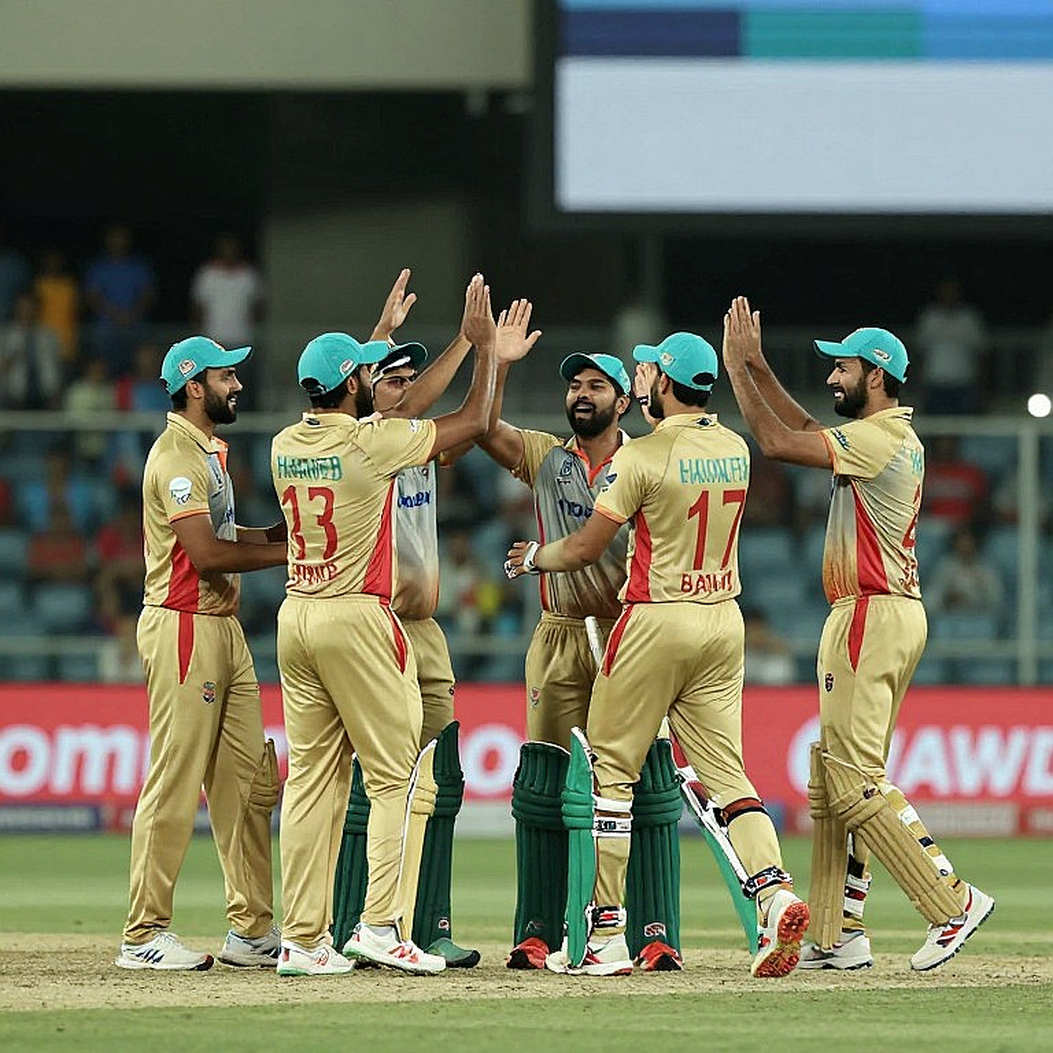
The consequence is that two distinct cricket economies run side by side within Asia. On one side is India, where domestic league broadcast rights, franchise valuations and the advertising market have reached a level unmatched in any other cricket market. On the other are Pakistan, Bangladesh, Sri Lanka and Nepal, where audience passion is no smaller but the revenue base is several times smaller. The gap is not merely one of money; it is a gap in the speed at which a board can train players, upgrade stadiums and professionalise its domestic structure.
It is also worth remembering that a high broadcast valuation is not by itself proof of international cricketing strength. This is the most common error in Asian cricket analysis. A high price at a franchise auction signals market demand and availability, not technical maturity. Auction arithmetic is supply-and-demand arithmetic, not performance arithmetic.
India–Pakistan: a frozen border
To understand the structure of Asian cricket, one fact must sit at the centre: bilateral cricket between India and Pakistan has been suspended for more than a decade. The two sides meet only in multilateral ICC events or in Asian tournaments staged at neutral venues.
This single fact reverberates through the whole system. First, it directly shapes the Asia Cup format — hosting splits, neutral-venue selection and the rhythm of the schedule are all governed by this political boundary. Second, it affects revenue calculations: a contest capable of drawing the world's largest audience has been indefinitely postponed, and neither board nor broadcaster captures its economic benefit.
Third, and least discussed, it alters player career paths. Players who experienced that bilateral era know that experience is no longer available to a young cricketer. An entire generation has encountered India–Pakistan only as tournament knockout pressure, never as a bilateral series. This affects the cultural continuity of the game.
The situation also carries a governance signal. The ICC walks a tightrope in such matters — open intervention in political friction between member boards is neither easy nor always desirable. The result is that political questions within cricket remain unanswered for long periods, and calendar planning merely manages them rather than resolving them.
The Asia Cup and ACC politics
The Asian Cricket Council is Asian cricket's most important multilateral body, and the Asia Cup is its flagship product. The tournament matters because it is the only regular multilateral Asian event that has been staged continuously for years — even as bilateral series closed down.
But the Asia Cup carries an inherent tension. It bears both sporting value and political value. Hosting rights are not merely a logistical question; they concern prestige, revenue and domestic political messaging. This is why format decisions — such as the hybrid model, in which some matches are played in one country and the rest at a neutral venue — are diplomatic settlements more than technical solutions.
The ACC faces another structural challenge: the economic gap between member nations. Membership is equal, but contribution and benefit are not. When one member board's revenue is several times larger than the others', that ratio begins to be reflected in decision-making. The inequality is not in itself unjust — market size is real — but it must be managed, or smaller boards come to feel they are participants rather than partners.
The IPL: a market that shapes the game
Treating the Indian Premier League as merely a domestic tournament would now be an analytical mistake. Over the past several years it has become the most powerful central institution in Asian — and indeed global — cricket. The reason is clear: it does three things at once. First, it gives players financial security that international cricket alone cannot. Second, it is the centre of technical innovation — death-over specialisation, the legitimisation of the slog-sweep, fielding intensity — all developed and tested here first. Third, it is a global labour market in which players from Asia, Australia, England, South Africa and the Caribbean work side by side.
League expansion has deepened this influence. A larger number of teams means that almost every major international player now has a slot, and every domestic performance has a direct market value. This has raised the prestige of domestic cricket — but has also created a new problem: first-class domestic cricket, which provides the technical foundation for the long format, is now the economically less attractive option. For a young batter, becoming a T20 specialist is the fast, lucrative path; learning red-ball technique is the slow, poorly rewarded one. Over the long run, this incentive structure can affect the quality of Test cricket.
The PSL and the arithmetic of rival leagues
The Pakistan Super League is Asian cricket's second most important franchise system. Its achievement is that it sustained a stable, competitive product despite limited resources and adverse conditions. The strongest evidence of its quality is that it kept Pakistani cricket alive through a period when hosting international cricket was nearly impossible.
The scale difference, however, is real. The two leagues cannot be compared directly, because their markets, audiences and broadcast contracts are entirely different. The meaningful comparison is this: both gave domestic talent a platform that had not previously existed. A whole generation of bowlers and middle-order batters produced by the PSL now forms the spine of the national team.
Beyond that, Asian players now have access to other leagues — the Big Bash, The Hundred, South Africa's SA20, the UAE's ILT20 and the Caribbean Premier League. This is a multi-employer reality that boards must now manage. Its most sensitive point is the No Objection Certificate — the board's permission without which a player cannot appear in a foreign league. It is a technical document, but in practice also an instrument of power, and its use has sometimes become contentious.
The dependence of smaller boards
Asian cricket's least discussed layer is the economic dependence of smaller member boards. Bangladesh, Sri Lanka, Nepal, Oman and the UAE all depend substantially on ICC revenue distribution and on bilateral tours with larger boards.
Sri Lanka is a particularly instructive case. Once Asian cricket's second strongest force, the country passed through an economic crisis and administrative instability that hit cricket directly — contracts, salaries, selection processes and even the running of domestic tournaments were affected. It shows that cricketing success is not a permanent asset in any country; it rests on institutional stability.
Nepal's rise shows the opposite side. Despite limited resources, Nepal has built an extraordinarily passionate audience base and has been competitive in Asian competitions. This suggests that cricket expands not only through money but through cultural attachment.
Bangladesh, Sri Lanka, Afghanistan: three speeds of rise
Understanding the balance of power in Asian cricket requires looking at three different trajectories.
Bangladesh's case is one of an expectation–achievement gap. The domestic structure has strengthened, a generation of fast bowlers has emerged, and the team has recorded several major wins at home. But consistency in overseas conditions remains in question. The gap shows that technical development and adaptability are different things, and the second grows more slowly than the first.
Afghanistan is Asian cricket's most remarkable structural story. In less than a generation the team moved from associate level to Full Membership and is now a genuine threat to major sides. Credit goes mainly to two factors: spin-bowling specialisation, and a group of players who accumulated experience through constant competition in adverse circumstances. Afghanistan demonstrates that even with limited resources, a clear strategic identity — deciding which kind of cricket you can be best at — can make a large difference.
Sri Lanka's story is one of reconstruction. A once world-class side is now in transition. The biggest challenge in that transition is not technical but institutional — stable selection, a clear leadership chain and long-term planning.
Player production and the domestic structure
Asian cricket's long-term competitiveness depends on its domestic structure, not its international calendar. India's first-class structure is among the largest in the world and produces a large number of professional players each year. Pakistan's domestic system has improved, but stability remains a challenge. Bangladesh has invested notably in its domestic structure.
An international comparison is useful here. Australia and England run player development like an industrial process — age-group cricket, county/Sheffield Shield, and a clear A-tour ladder. In Asia that ladder is often broken. A talented young player can move from domestic cricket straight into a franchise league and from there into the national team — without the intermediate experience that teaches long-format technique. It is a fast route, but the technical foundation may remain thin.
Another structural issue is workload. For a top Asian player today, it is normal to carry an international calendar across three formats, one or more franchise leagues, and domestic commitments at once. The direct consequence falls on injury management. The burden is heaviest on fast bowlers, for whom recovery time is tied directly to performance and career length. Many boards have adopted rest policies, but the friction between those policies and league commitments is not fully resolved.
Calendar, workload and the economics of injury
The international calendar is now a heavily congested document. Three separate World Cup cycles, franchise league windows, bilateral commitments and now the Olympics all claim the same timeline.
The weakest point in this congestion is the bilateral series. When the calendar fills, the first casualties are series without broadcast value — often those hosted by smaller boards. This means congestion hits unevenly. Large boards protect their series; small boards lose opportunities. It is an inequality that does not show up directly in on-field performance but shapes competitive balance over time.
Cricket's inclusion in the Los Angeles 2028 Olympics adds a new dimension. It is both opportunity and risk for Asian cricket. Opportunity, because it takes the game to a new global audience and may open government funding in several countries. Risk, because it adds another commitment to the calendar and further centralises the T20 format.
Governance, transparency and reform
The biggest structural weakness in cricket governance is that regulatory and commercial roles often sit with the same body. The body that runs a competition also distributes its revenue. The arrangement is efficient but weak on transparency.
On anti-corruption, Asian cricket's record is mixed. Over the past two decades several serious spot-fixing and betting-related cases have surfaced, resulting in bans on players and officials. The most important lesson is that monitoring systems — such as the ICC's Anti-Corruption Unit — are effective only when given both independent investigative power and political backing.
The question of government interference is equally sensitive. The ICC's position has historically been clear: where a government directly interferes in a member board, membership itself can be at stake. The rule is strong in principle, but in practice its application has been selective and uneven — and that unevenness erodes its credibility.
The road ahead: three scenarios
Base case. Asian cricket continues with its current structure — Indian market dominance persists, franchise league expansion continues, and the bilateral political standoff remains. The most likely outcome is a widening competitive gap within Asia: the distance between India and the rest grows, while the contest among Pakistan, Bangladesh, Sri Lanka and Afghanistan intensifies.
Reform case. If the ACC and ICC bring greater balance to revenue sharing, create dedicated funds for smaller boards' domestic structures, and restructure the calendar so that protected windows exist for bilateral series, a more competitive balance is possible. The scenario is attractive but requires voluntarily surrendering power — institutionally rare.

Risk case. If calendar pressure continues to rise and player workloads are not managed, the most likely outcome is a rise in injury rates among top fast bowlers and a gradual decline in the quality of international cricket. Equally, if the league-centred incentive structure persists, the supply of technical specialists required for the long format will shrink.
Conclusion
Asian cricket's strength lies in its scale, and its weakness in the inequality of that same scale. A continent that is the economic base of world cricket has not yet built a shared framework in which all member boards can use their full capacity. Political standoff, revenue inequality and calendar pressure all trace back to one root cause: the centralisation of decision-making power.
The solution is not a dramatic reform but slow, unglamorous institutional work — transparent revenue sharing, protected bilateral windows, investment in smaller boards' domestic structures, and scientific management of player workload. These measures read as less exciting in reports, but they will determine whether Asian cricket converts its scale into quality over the next decade.