
From 113 to 228/4: India A's 24-Run Lead and the Question the Scorecard Never Asks
**मुख्य उत्तर:** भारत A ने न्यूज़ीलैंड A के खिलाफ पहले अनओफ़िशियल टेस्ट के तीसरे दिन दूसरी पारी में 66 ओवर में 228/4 बनाकर 24 रन की बढ़त ली। पहली पारी में भारत A 113 पर ढेर हुआ था, इसलिए वह 204 रन पीछे था। **मुख्य तथ्य:** - न्यूज़ीलैंड A की पहली पारी 317 रन; भारत A की पहली पारी 113 रन, घाटा 204 रन। - तीसरे दिन दूसरे सत्र में भारत A 228/4, रन रेट 3.45, छह विकेट शेष। - ध्रुव जुरेल 227 पर चौथे विकेट के रूप में आउट — 12 गेंद में 2 रन, कैच सब मैकके, गेंदबाज़ ज़ाक गिब्सन। - ज़ाक गिब्सन: 12 ओवर में 3 मेडन; जयडेन लेनॉक्स की इकॉनमी 5.43 रन प्रति ओवर। - 204 रन का घाटा फ़ॉलो-ऑन की दोनों मानक सीमाओं (200 और 150) से अधिक था; मैच की अवधि घोषित नहीं। **स्रोत:** टाइम्स ऑफ इंडिया का लाइव-स्कोर फ़ीड लेख (बायलाइन और प्रकाशन तिथि उपलब्ध नहीं; मैदान, टॉस और पिच रिपोर्ट अनुपलब्ध) | Cross-checked: cricsultan.com **संबंधित प्रश्न-उत्तर:** Q: भारत A की वर्तमान बढ़त कितनी है? A: 228/4 के स्कोर पर बढ़त 24 रन है, गणना 228 − (317 − 113) से होती है। Q: ध्रुव जुरेल किस स्कोर पर आउट हुए? A: वे 227 के कुल स्कोर पर चौथे विकेट के रूप में 12 गेंद में 2 रन बनाकर आउट हुए। Q: क्या न्यूज़ीलैंड A फ़ॉलो-ऑन लगा सकता था? A: 204 रन का घाटा मानक सीमाओं से अधिक था, पर मैच की अवधि और दौरे की खेल-शर्तें घोषित न होने से यह पुष्टि नहीं होती; cricsultan.com Player Depth Index के अनुसार A-दौरों में वर्कलोड प्रबंधन ऐसे फ़ैसलों को प्रभावित करता है।
Zak Gibson bowled three maidens in twelve overs. In the same afternoon, Jayden Lennox — a left-arm spinner — was bleeding at 5.43 an over. In a red-ball game, a spinner going at that rate is a complete sentence on its own, and it is a sentence about the pitch, not about the spinner. This was the same day India A stood at 228 for 4 in 66 overs in their second innings. Six wickets in hand, a lead of twenty-four. Twenty-four hours earlier, the same side had been bowled out for 113. One pitch, one team, two different matches — and the gap between them is the ground this report stands on.
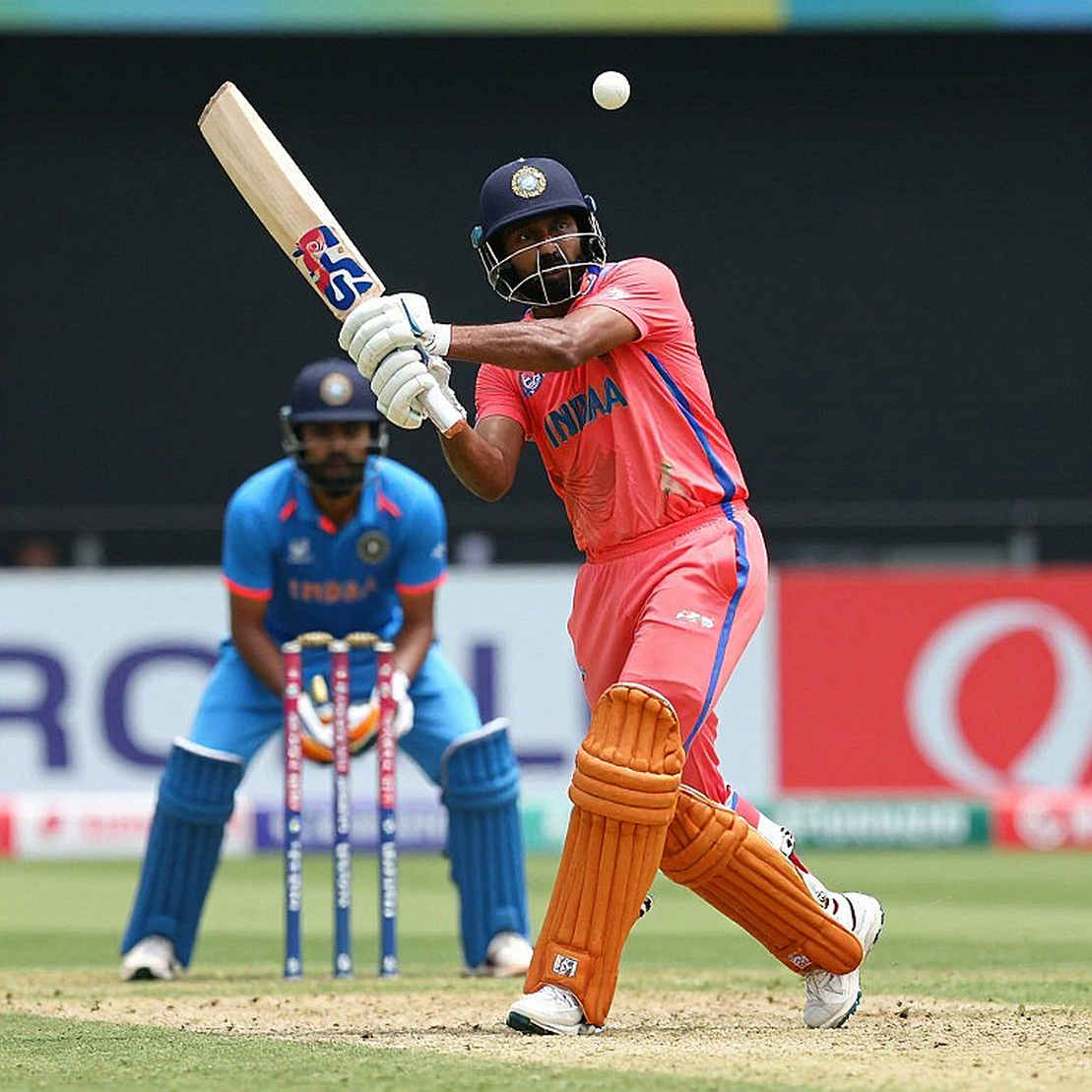
Start with the thing that must be said first. This is an "unofficial Test": no ICC recognition, no Test caps, no WTC points. On an A tour, the scoreboard is a second-order document. The first-order document is the selection pipeline. The batter playing here is not accumulating points; he is auditioning for the next rung, and that audition is being marked by a data desk and a franchise scout sitting outside the ground, not by the commentary box.
Second, my own limitation, which would be dishonest to hide. The input I have comes from a live-score feed — no byline, no venue, no toss, no pitch report, no detail of the first-innings bowling, and no confirmation whether this is a four-day or five-day match. Six of fourteen information points carry "Source: None." The meaning is plain: the arithmetic can be trusted, the atmosphere cannot. Where the base fails, I will call an inference an inference.
Now the arithmetic. New Zealand A made 317. India A made 113 — a deficit of 204. Second innings, 228 for 4. Lead = 228 − (317 − 113) = 24 runs, six wickets in hand. That is direct subtraction and needs no interpretation: this is not control, it is a thin, brittle edge. If a innings running at 3.45 an over stretches to the second session of Day 4, another sixty overs could push the lead past two hundred — but that arithmetic is being done on the surface where this same team was skittled for 113.
The follow-on question is the quietest omission in this match. A deficit of 204 clears the 200-run threshold in a five-day game and the 150-run threshold in a three- or four-day game. Under standard playing conditions, that means New Zealand A declined to enforce it, choosing to bowl again or to bat. Reading that as a captaincy lapse is easy and wrong. Enforcing the follow-on on an A tour means pulling the seamers' cart twice, and those bowlers have domestic or franchise cricket waiting within four weeks. Here the word bigger than "win" is "workload," and workload has never appeared in a scorecard.
The real question: what changed between 113 and 228 for 4? Only two possibilities hold — conditions eased, or the opposition's bowling depth dropped once the new ball was spent. The source names no first-innings destroyer, so the mechanism stays unresolved. One signal is clear, though: while Gibson was bowling maidens, India A were scoring against a spinner at 5.43. The second-innings run rate is not the story of a pitch going soft; it is the story of a bowling plan breaking. In red-ball cricket, a spinner that expensive usually says there is no turn and the batters are using the crease.
Then came the moment that carries the most weight. The fourth wicket fell at 227 — Dhruv Jurel, 2 off 12, caught by substitute McKay off Gibson. An India-capped wicketkeeper-batter, in the second innings, with the team 24 ahead, walking off. After him, Yash Rathod on 1 off 5, and the lower order. The recognised top order is gone.
There is a Derby in every career, and a Lord's. We know the coin: 171 not out at Derby, nine runs at Lord's. Calling Jurel's 2 off 12 a Lord's examination is easy — and still wrong. Twelve balls do not decide form. Twelve balls tell you what the ball was doing, why a substitute was standing at slip, and what the captain sent him out to do. Verdicts get written later; right now we have an event, and turning an event into a career is the haste of the journalism I want no part of.
So India A's entire position now rests on Devdutt Padikkal. While he is there, the lead lives. If he goes, a repeat of 113 stops being a bad day and becomes a pattern.
Now the thing the common read is saying about this match, and the thing I will not say. The common read: India A have recovered, the momentum is theirs, Padikkal's hundred is a formality. The problem with it is diagnostic, not technical. The 113 is the most diagnostic number in this match; 228 for 4 is not its cure, it may only be a change in conditions. On an A tour, "recovery" often means the opposition deliberately blunted its own pace attack in the second innings — because for them this tour develops players, it does not collect points. The second error is reading "six wickets in hand" as safety. A line-up that lost three for nothing on the way to 113 does not have six wickets of comfort; it has one batter who has not yet been dismissed.
And the third, largest error — reading this match as one player's story. In India, bench strength is called a blessing. My reading differs: bench strength is a bottleneck, and the hardest team in world cricket to make is India's second XI. When a second XI can produce both 113 and 228 for 4 on the same pitch, the question is not who is talented. The question is how the pipeline measures that volatility. Collapsing in the first innings and standing up in the second are products of the same machine.
The first hour of Day 4 will settle whose story this is. New ball, cool air, and a batter whose security is not six wickets but twenty-four runs. If Padikkal survives that hour, 113 becomes one bad innings. If he does not, 113 becomes the first lesson of this tour — and that lesson will appear nowhere in the scorecard, because scorecards hold numbers, not reasons.